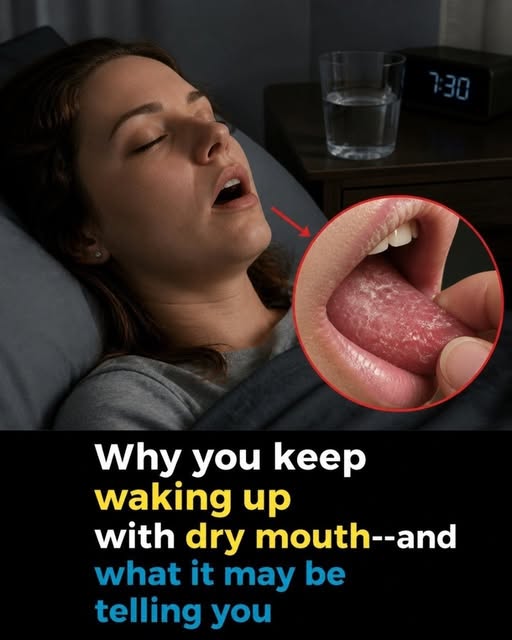
night, accelerating oral drying. It also disturbs the natural breathing rhythm, further reducing saliva circulation in the oral cavity. Addressing snoring – through positional changes, weight management, or medical evaluation – often reduces causes of mouth dryness at night.
Sleep Apnea: Obstructive sleep apnea (OSA) is a condition in which the airway is repeatedly blocked during sleep, causing the person to unconsciously gasp and breathe through their mouth. Research indicates that over 30% of people with OSA experience morning dry mouth, compared to approximately 3% of those without the condition. If you
Waking up with dry mouth? Here’s what your body might be telling you