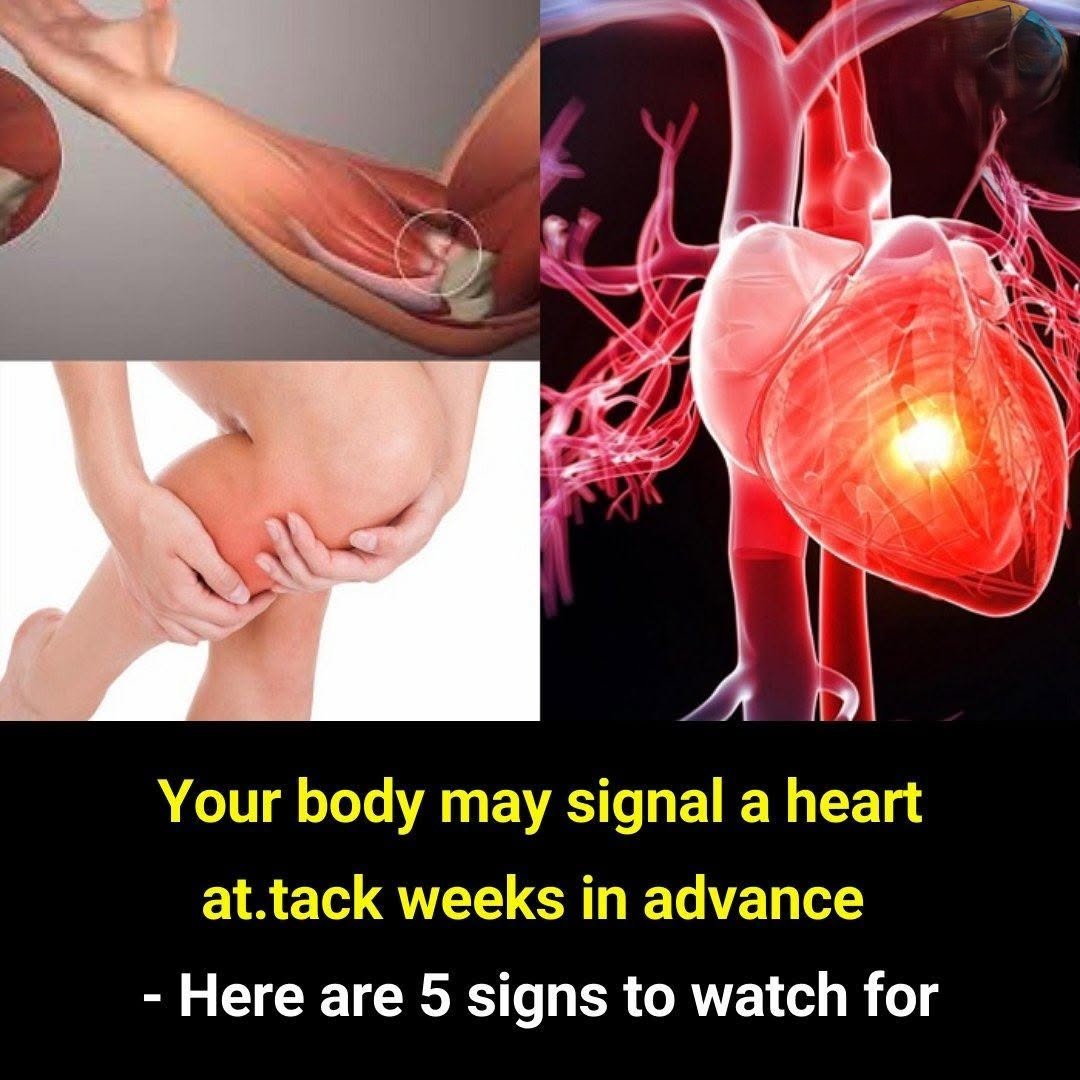
These 5 Symptoms May Be Early Clues of an Upcoming Heart Attack

Heart attacks are often imagined as sudden, dramatic events. Many people picture someone clutching their chest and collapsing without warning. But in real life, heart attack symptoms can be more subtle. Some warning signs may appear hours, days, or even weeks before a serious cardiac event.

This does not mean every tired day, stomach upset, or shortness of breath is a heart attack. Many conditions can cause similar symptoms. However, if symptoms are unusual, persistent, sudden, or happen together, especially in someone with risk factors like high blood pressure, diabetes, smoking, high cholesterol, obesity, or a family history of heart disease, they should be taken seriously.

The original article focuses on five early clues people sometimes overlook: unusual fatigue, chest discomfort, shortness of breath, pain spreading to other areas, and symptoms such as nausea, sweating, or dizziness.

What Happens During a Heart Attack?

A heart attack happens when blood flow to part of the heart muscle is blocked. Without enough oxygen-rich blood, that part of the heart can become damaged. Quick treatment matters because the longer blood flow is blocked, the greater the risk of serious heart damage.

Heart attack symptoms can include chest pain or discomfort, shortness of breath, pain in the arm, jaw, neck, back, or shoulder, nausea, lightheadedness, or unusual tiredness. These symptoms may be sudden, but they can also build gradually.

1. Unusual Fatigue