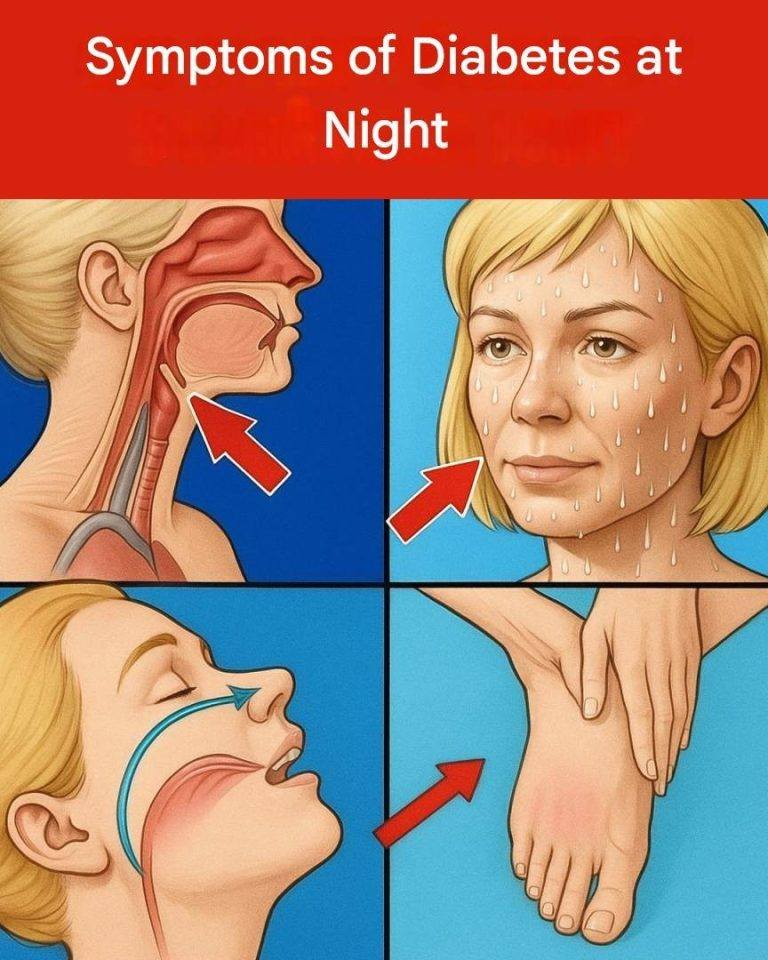
One of the most common diabetes symptoms is urinating more often than usual. At night, this may mean waking once, twice, or several times to use the bathroom.
When blood sugar is high, the kidneys work harder to remove extra glucose from the blood. This can increase urine production and disturb sleep. The CDC lists frequent urination, increased thirst and hunger, fatigue, and numbness or tingling in the hands or feet among common diabetes symptoms.

Occasional nighttime urination can happen to anyone, especially after drinking a lot before bed. But if it becomes a regular pattern, especially with thirst or fatigue, it should be checked.
2. Waking Up Very Thirsty
Waking up with a dry mouth or strong thirst may happen when the body loses extra fluid through frequent urination. Some people keep water beside the bed because they wake up thirsty again and again.
Mayo Clinic lists greater thirst and more urination as important diabetes symptoms and advises contacting a healthcare professional if possible diabetes symptoms appear.
Thirst can also come from salty food, dry air, mouth breathing, dehydration, or certain medications. The concern is when thirst is unusual, persistent, and combined with other symptoms.
3. Night Sweats or Restless Sleep
Night sweats can have many causes, but for people with diabetes or those using diabetes medicine, sweating during sleep may sometimes be linked to low blood sugar at night.
The American Diabetes Association explains that low blood glucose can trigger symptoms such as sweating, a pounding heartbeat, tingling, and anxiety, and people may be less likely to wake up when blood glucose drops during sleep.
If you wake up sweaty, shaky, confused, very hungry, or unusually tired, speak with a healthcare professional, especially if you already have diabetes or take medication that affects blood sugar.
4. Tingling, Burning, or Numbness in the Feet
At night, foot symptoms can feel stronger because you are lying still. Some people notice tingling, burning, numbness, pins and needles, or discomfort in the toes and feet.
Mayo Clinic notes that tingling and numbness can happen in people with diabetes because high blood sugar can affect nerve function. NIDDK also lists pain, numbness, or tingling in the feet or hands among diabetes symptoms.
Foot symptoms can also come from vitamin B12 deficiency, circulation problems, back issues, medication effects, or nerve compression. If the symptom keeps returning, it is better to get it evaluated.
5. Feeling Exhausted in the Morning