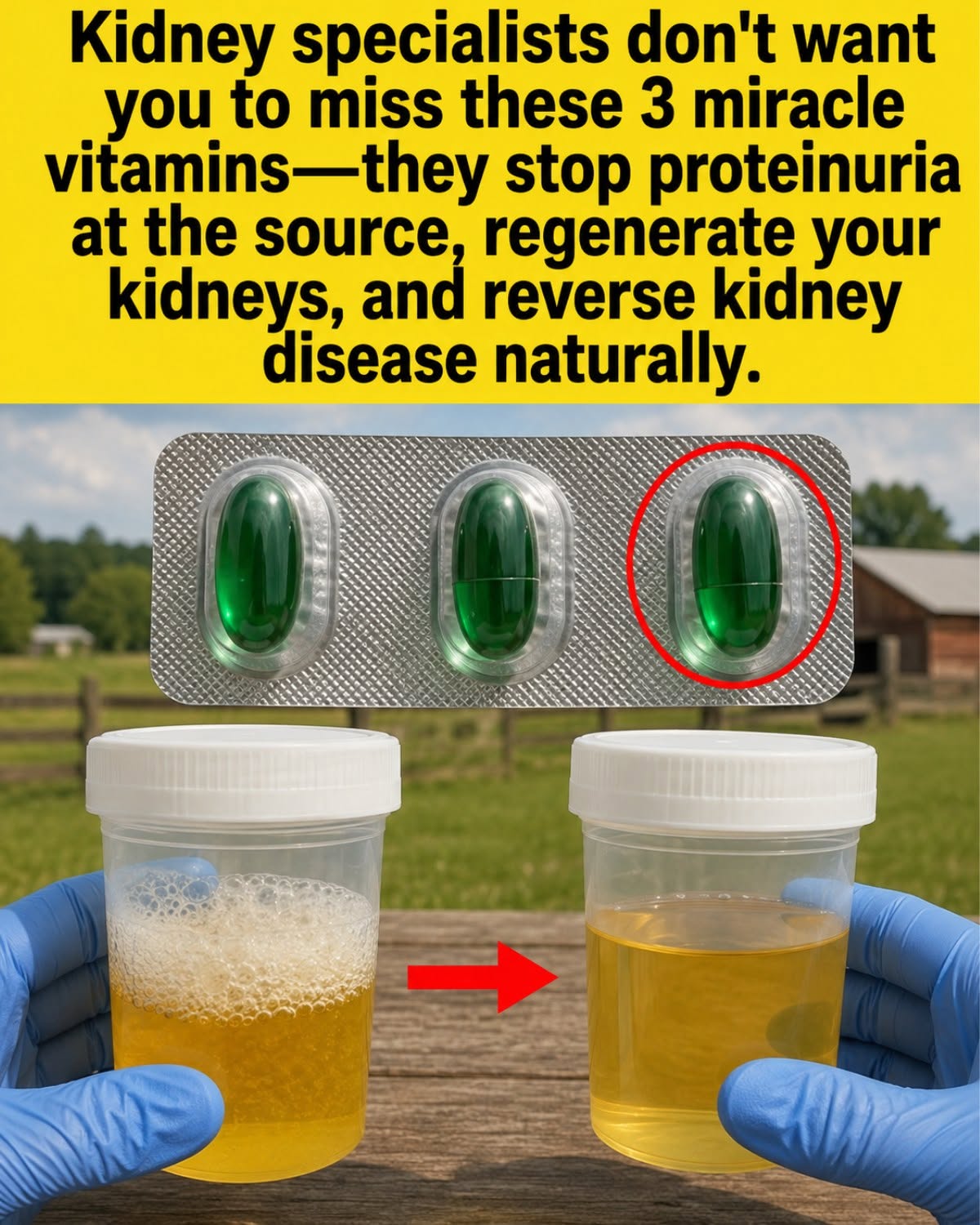
The first vitamin changes the fire inside the kidney.
Vitamin D and the kidney fire
Vitamin D acts like a fire-smothering compound inside damaged kidney tissue. When inflammation swells the glomeruli, those microscopic filters swell open and protein starts leaking out; vitamin D helps cool that internal blaze and quiet the pressure that keeps the leak going.

Think of your kidney filter like a coffee cone that has been bent out of shape. Water still passes through, but the grounds start escaping too, and suddenly the cup is full of grit instead of clean liquid.
That is why people with foamy urine often notice more than just a strange toilet bowl. Their ankles feel puffy by late afternoon, rings feel tighter, and mornings begin with that heavy, draggy feeling that says the body is holding onto what it should have released.
Vitamin D also helps regulate the hormones that push blood pressure higher inside the kidney. When that pressure stays elevated, the filter gets hammered like a hose with the nozzle half-clamped shut.
The second vitamin protects the cell walls from being shredded.
Vitamin E works like a rust-stripping, wall-protecting shield for the cells lining the filtration system. It helps defend those membranes from free radical damage, the kind of microscopic wear that slowly turns a tight barrier into a leaky one.
Picture a raincoat with tiny pinholes you cannot see from across the room. The coat still looks fine hanging by the door, but the moment the storm starts, water sneaks through every weak spot.
That is what kidney damage can feel like from the inside: nothing dramatic at first, then suddenly the body is wet where it should be sealed. The urine turns bubbly, the legs feel swollen, and the day gets shorter because fatigue starts stealing your energy before lunch.
Vitamin E also supports the cleanup process that cells use to repair themselves. When that process runs smoothly, the kidney’s lining stays cleaner, stronger, and less likely to spill protein into the urine.
The third vitamin attacks a hidden clotting and repair problem.
Vitamin B9 and the repair code
Vitamin B9, also called folate, is cellular ammunition for repair. It helps break down homocysteine, a compound that rises when the system is under strain and can stir up vessel damage, clotting trouble, and more pressure on already stressed kidneys.
Now picture a drainpipe filling with sticky sludge while the water keeps coming. The pipe does not burst all at once; it narrows, backs up, and starts forcing pressure into every weak joint.
That is the hidden cost of low folate in a body already fighting kidney stress. The damage does not always announce itself with pain; sometimes it shows up as a strange froth in the toilet, a face that looks puffy in the mirror, or a day where your body feels strangely brittle.
For people on dialysis, B9 matters even more because the filter is no longer doing the job on its own. The body needs support to keep the repair machinery from stalling out completely.
Why the foam shows up before the crash.
What foamy urine is really saying
Foamy urine often appears before people feel truly sick because the kidney damage starts at the filter, not the nerves. The filter leaks first; the body complains later.
That is the cruel part. You can still go to work, answer messages, and move through the day while your kidneys are quietly losing their grip on protein, fluid balance, and pressure control.
By the time swelling, nausea, muscle cramps, or that dull washed-out exhaustion show up, the system has already been under strain for a while. The foam was never the whole story — it was the first page.