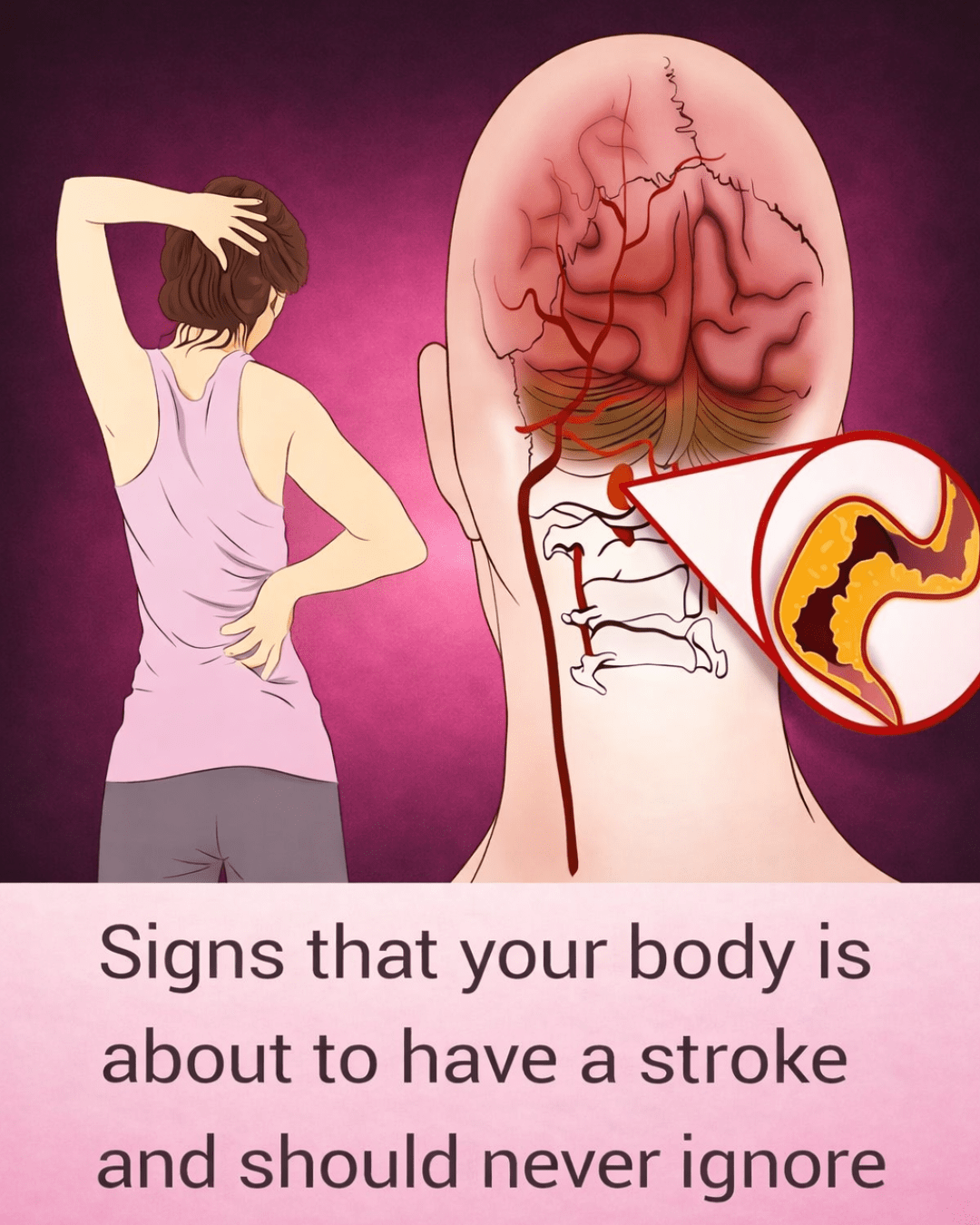
🛡️ Prevention Tips to Reduce Risk of
Early Warning Signs of a Stroke
While some factors cannot change, daily choices help lower chances of early warning signs of a stroke appearing.
Keep blood pressure in a  healthy range, manage cholesterol and blood sugar, avoid smoking, eat balanced meals, and stay active regularly.
These steps work together to support overall   health and may reduce the likelihood of early warning signs of a stroke.

Conclusion: Stay Alert to Early Warning Signs of a Stroke
Learning these 10 early warning signs of a stroke empowers you and your family to respond with confidence. Start by sharing this knowledge today and practice the FAST check regularly.
Every moment counts when early warning signs of a stroke appear, so act without hesitation by calling emergency services.
Bookmark this guide and discuss it with loved ones for peace of mind.
FAQ About Early Warning Signs of a Stroke
1. What should I do immediately if I notice early warning signs of a stroke?
Call emergency services right away if you see any early warning signs of a stroke. Do not wait to see if symptoms improve.
2. Can early warning signs of a stroke disappear on their own?
Sometimes symptoms fade temporarily, but these early warning signs of a stroke still require urgent medical evaluation because they may signal higher future risk.
3. How can I help prevent early warning signs of a stroke from happening?
Focus on healthy lifestyle habits like regular exercise, balanced eating, and managing conditions such as high blood pressure to lower the chance of early warning signs of a stroke.
This article is for informational and educational purposes only. It does not constitute medical advice and is not intended to diagnose, treat, or cure any condition. The information provided about early warning signs of a stroke should not replace professional medical guidance. Always consult with a qualified healthcare provider before making any health decisions, particularly if you experience symptoms or have underlying health conditions. Individual results and experiences may vary. Call emergency services immediately if you suspect a stroke.
Colonoscopy is a diagnostic examination that uses an endoscopic probe to explore the internal walls of the colon and determine the presence of lesions, ulcers, obstructions and, most importantly, tumor masses.
This type of test is a fundamental preventative tool for everyone, although it is recommended as a screening test, particularly for people at risk. Thanks to a simple test like this, it is already possible to identify and, if necessary, remove very small tumors, thus preventing their irreversible degeneration.
Â
Colonoscopy helps prevent the second most frequently diagnosed  cancer in Italy: colorectal cancer. This examination is generally performed after a positive result on a fecal occult blood test, a test included in regional early detection programs for this serious disease.
Although this type of examination is performed with the utmost care and is becoming less uncomfortable, it is still considered potentially painful and embarrassing due to its undeniably invasive nature. A colonoscope, a flexible tube equipped with a microcamera, is manually inserted into the anal canal.
Medicine has continued to make significant progress in this area. Regarding colonoscopy, a major innovation has recently emerged: virtual colonoscopy. Let’s see what it involves. Virtual colonoscopy is a non-invasive radiological technique that allows visualization of the colon wall without an endoscope. It makes the examination much less invasive than a traditional colonoscopy, while providing much more accurate results.
See the next page on the next page
This technique is used when traditional procedures are impossible, for example, in cases of serious conditions preventing access. Virtual colonoscopy offers a more comprehensive view of the patient’s condition by evaluating the digestive tract upstream of any obstruction or subocclusive lesion.
To explain this technique in detail, it can be defined as an endoscopic procedure performed using 3D computer reconstructions after a simple scan. The computer creates a graphic animation that shows images of the colon’s mucosal surface with equal, or even greater, precision than a traditional colonoscopy.
Virtual colonoscopy is recommended as a screening method, particularly for people over fifty who are considered at risk or who have already undergone endoscopic polypectomy and require further examination.
Its only drawback compared to traditional colonoscopy is that, by its very nature, it does not allow for biopsies. Therefore, it is not recommended for patients at risk of developing polyps or colorectal cancer, in whom the traditional endoscopic probe allows for immediate removal. Of course, your specialist will determine the most appropriate technique for your specific case. It is important to note that technological and medical advancements are ongoing.
This technique is used when traditional procedures are impossible, for example, in cases of serious conditions preventing access. Virtual colonoscopy offers a more comprehensive view of the patient’s condition by evaluating the digestive tract upstream of any obstruction or subocclusive lesion.
To explain this technique in detail, it can be defined as an endoscopic procedure performed using 3D computer reconstructions after a simple scan. The computer creates a graphic animation that shows images of the colon’s mucosal surface with equal, or even greater, precision than a traditional colonoscopy.
Virtual colonoscopy is recommended as a screening method, particularly for people over fifty who are considered at risk or who have already undergone endoscopic polypectomy and require further examination.
Its only drawback compared to traditional colonoscopy is that, by its very nature, it does not allow for biopsies. Therefore, it is not recommended for patients at risk of developing polyps or colorectal cancer, in whom the traditional endoscopic probe allows for immediate removal. Of course, your specialist will determine the most appropriate technique for your specific case. It is important to note that technological and medical advancements are ongoing.